Construction Site Attendance Tracking
Registers get filled in at the end of the week and buddy-punching is common. How to record who was on site and when, with evidence both sides trust.
On most construction sites, attendance is a register kept by a foreman and filled in at the end of the day or, too often, at the end of the week. It is easy to fake and easy to lose, and it causes most of the pay disputes on a project. When a labour contractor bills for twenty workers and the site saw fourteen, the register rarely settles it.
What goes wrong
- Registers are written up later, from memory.
- Buddy-punching: one worker signs in for an absent friend.
- Only presence is recorded, not hours, so overtime turns into an argument.
- People move between sites and nobody records where they were each day.
- Hours are re-typed into payroll, with errors creeping in at every step.
What good site attendance records
- Each person by name, rather than "twelve labourers".
- When they started and finished, and their breaks.
- Where they were when they clocked in and out.
- Lateness and overtime against the agreed hours.
- Any corrections, with who made them and why.
Location makes it evidence
When a clock-in records the phone's location and its accuracy, attendance becomes something you can check. It stops most buddy-punching, because signing in for someone else means having their phone on site. On projects with several sites it also tells you where a person was on Tuesday.
Keep the rules clear and fair: location is recorded at clock-in and clock-out, and only during working time. See how to track field employees without losing their trust.
Practical points on a construction site
- Signal is poor on many sites, so clock-ins must work offline and keep the time they were made.
- Missed clock-outs cause more errors than anything else. Remind people on the day.
- Everyone who clocks in needs a phone that can run the app. Crews without smartphones stay on the register, which should be transferred the same day.
- Supervisors need to see their crew and be able to correct genuine mistakes with a note.
From attendance to pay
Attendance only saves time if it goes straight into payroll as days worked, overtime and absences for each person, reviewed before pay is calculated. See construction crew payroll from site attendance.
In Movtro
In Movtro each worker clocks in and out on their phone, with breaks, and the location and GPS accuracy of each entry are recorded. Clocking in works without signal and keeps the time it was made. Lateness is measured against each person's working days and hours plus a grace period, and overtime against your standard day. When someone is late or has not clocked in or out, reminders go to the worker and to the supervisors or HR people you choose. Supervisors see their team's attendance, and a manager with permission can clock out someone who forgot. Before pay is calculated, the worked time, overtime and absences going into payroll can be adjusted with a note, and the change is logged. Attendance feeds the HR module's payroll.
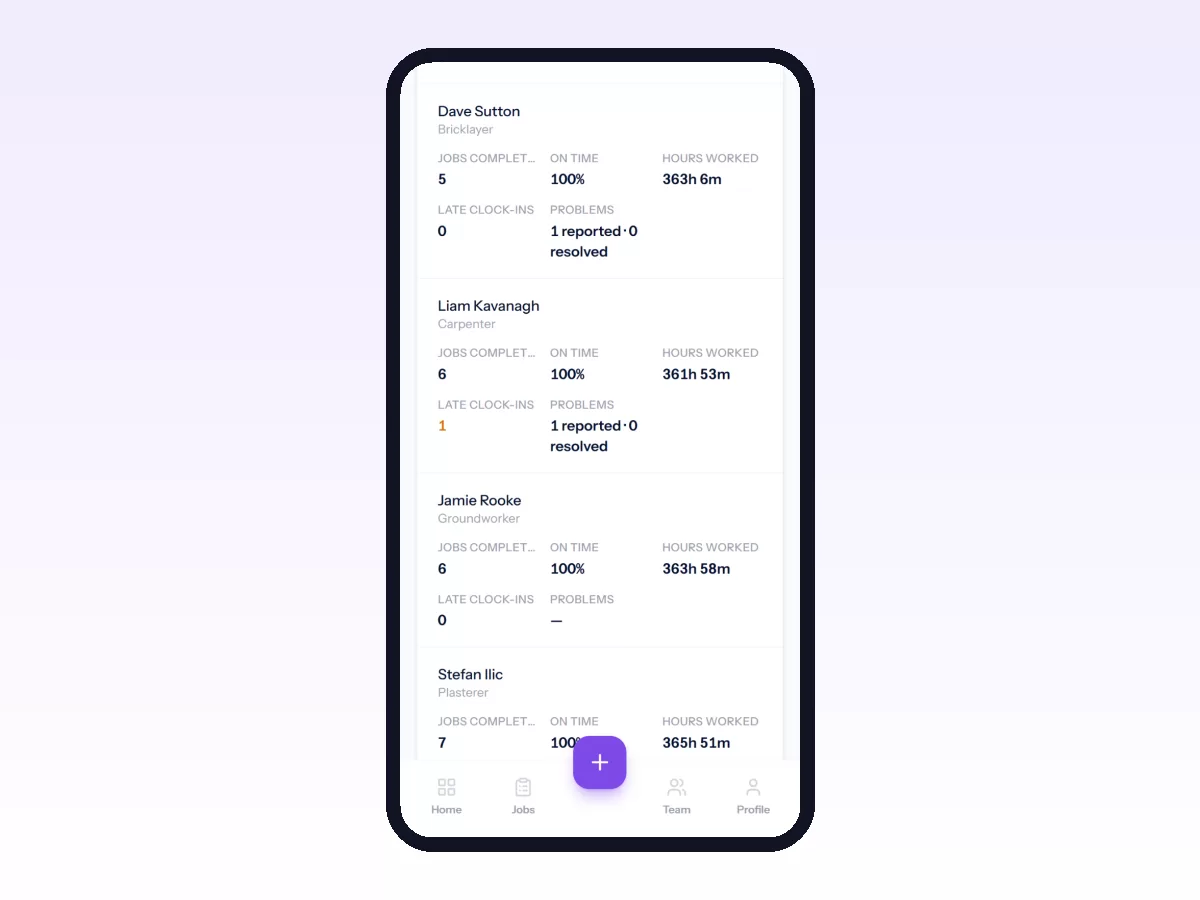
Limits: you can set up named work locations, each optionally linked to a site, and every clock-in records which one it matched, but there is no project-by-project attendance report yet. Each worker needs their own phone, because a foreman cannot clock in on a crew's behalf. Payroll runs monthly.
See construction crew payroll, or start free.
Related: Construction Workforce Management · Construction Daily Reports: What to Record and How