HVAC Service Checklist: What Every Maintenance Visit Should Cover
A practical HVAC maintenance checklist for split units, ducted systems and VRF, with the readings worth recording and the reason for each step.
A good HVAC service follows the same steps every time, done properly, with the main readings recorded. Treat this checklist as a starting point and adapt it to the equipment you maintain and the manufacturer's requirements.
Before you start
- Confirm which units the visit includes.
- Look through the unit's history: previous faults, readings and parts.
- Isolate the power before opening any unit.
Split and wall-mounted units
Indoor unit
- Clean or replace the filters
- Clean the evaporator coil
- Clean the blower wheel and check it runs true
- Flush the condensate drain and check the tray and pump
- Check the louvre motor and swing
- Check the remote and display
Outdoor unit
- Clear debris from around the unit
- Clean the condenser coil
- Check the fan blade and motor
- Check electrical connections for tightness and heat damage
- Check the capacitor and contactor
- Inspect refrigerant pipework, insulation and joints for damage or oil stains
Test and record
- Measure suction and discharge pressures
- Measure the compressor and fan motor current
- Measure supply and return air temperatures
- Run in cooling (and heating, for heat pumps) and listen for abnormal noise
Ducted and package units
On top of the steps above:
- Check belts and pulleys, and the blower motor
- Check dampers and actuators
- Inspect accessible ductwork for leaks and loose joints
- Check the economiser, where fitted
- Check the thermostat or controller settings and schedule
VRF and multi-split systems
Also:
- Check the outdoor unit's error history
- Check every indoor unit on the system rather than a sample
- Check communication wiring and addresses
- Record the system's operating data from the service tool, as the manufacturer specifies
Readings worth recording every time
Over several visits, these readings tell you more than any single inspection can:
- Suction and discharge pressure
- Compressor current
- Supply and return air temperature, and the difference between them
- Outdoor ambient temperature at the time
Suction pressure falling over three visits means a slow leak, and a rising compressor current is a warning sign. You can't see either from one reading.
Photos
Photograph each unit before and after, the nameplate once, and anything the customer should see, such as a corroded coil, a damaged pipe or a blocked drain.
After the visit
- Note anything that needs a repair quote.
- Tell the customer what you found, in plain words.
- Check that the next visit is scheduled.
In Movtro
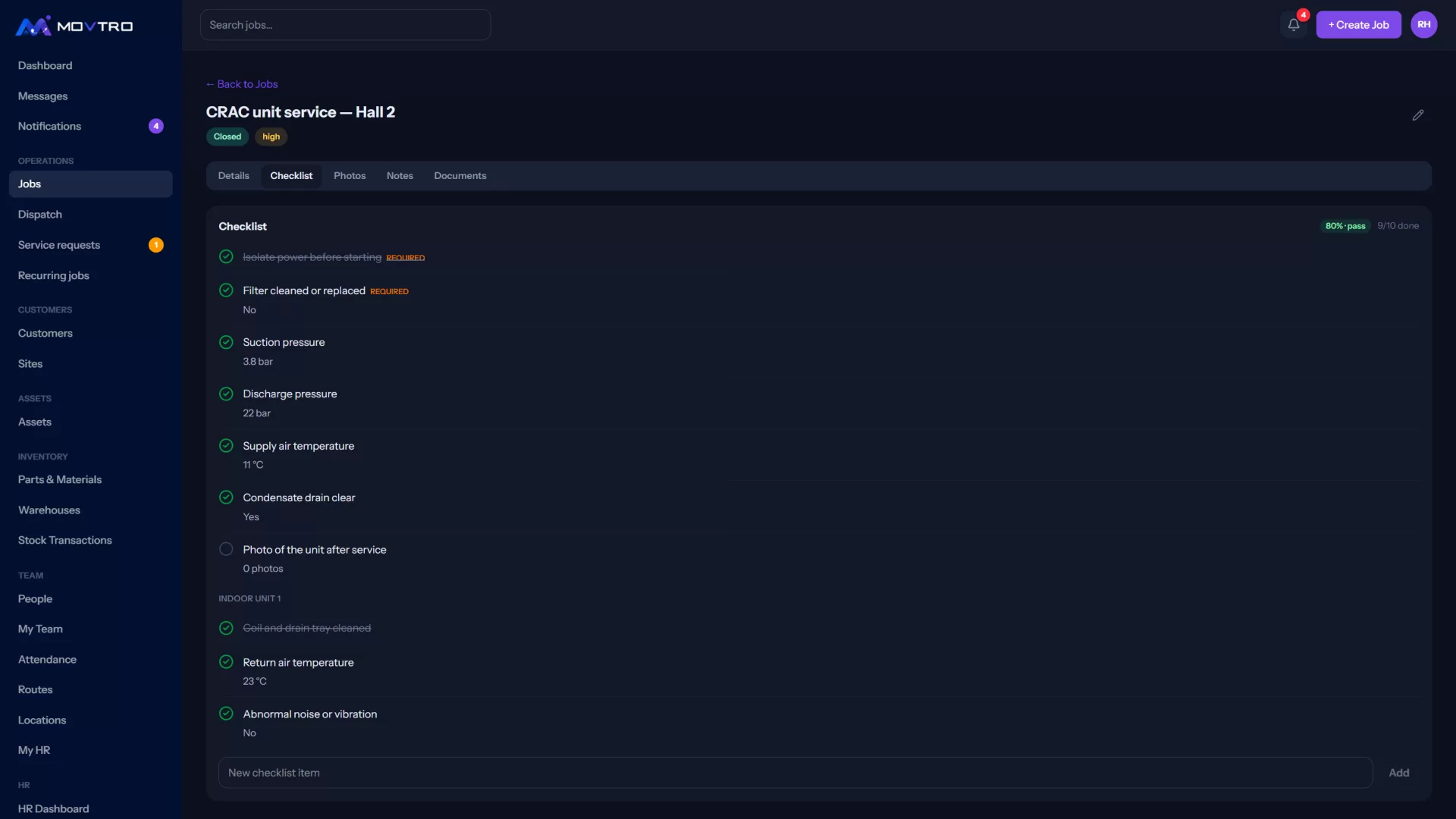
In Movtro this checklist sits on the job, or once on a recurring maintenance job so every visit starts with it. When one visit covers several units, the checklist repeats for each. Mark the steps that must never be skipped as required. Readings such as pressure, current and temperature are their own checklist questions with a unit and an expected range, and a reading outside the range is flagged and reports a problem on the job by itself. A step can ask for a photo, and every visit adds to the unit's history.
See HVAC field service management and HVAC maintenance agreements.