Telecom Tower Maintenance Teams
Tower maintenance means planned visits to hundreds of remote sites, emergency call-outs when a site goes down, and proof that each visit happened. Here is how to run it with a small team that spends a lot of time driving.
Telecom tower maintenance teams look after hundreds of sites spread over large areas: rooftops in cities, masts on hills, shelters by the highway. The work mixes planned preventive visits with urgent call-outs when a site goes down, and the operator wants proof that both were done.
Organise by site
Each tower or rooftop is a site, and it holds:
- access notes, such as gate keys, landlord contact, security escort, access hours and road conditions;
- the equipment on site: generators, batteries, rectifiers, the shelter's air conditioning, fire extinguishers;
- the customer, which is the tower company or operator.
When a technician opens a job, they have what they need to get in and start work.
Planned preventive maintenance
A typical schedule looks like this:
- Monthly: generator checks, battery checks, shelter cleaning and a security inspection.
- Quarterly: air conditioning service, earthing checks and a visual inspection of the structure.
- Yearly: a full inspection and the reports the operator requires.
Put each site's visits on a schedule so they are created and assigned ahead of time. Group visits by area so a technician can cover several sites in a day. Keep a close eye on overdue visits, because missed PM is what causes outages later.
Emergency call-outs
When a site goes down, the dispatcher needs to know which qualified technician is nearest. Mark call-outs as critical, assign them quickly, and follow the job through travelling, on site and completed so you can keep the operator updated.
Proof of visit
Operators often dispute whether a remote site was visited. This evidence settles it:
- where the technician was when the job started, compared with the site;
- photos of the equipment, the shelter and the meter readings;
- a completed checklist.
Safety
Tower work is dangerous. Track working-at-height and electrical certifications with their expiry dates, and report safety issues on the job so they are escalated the same day.
In Movtro
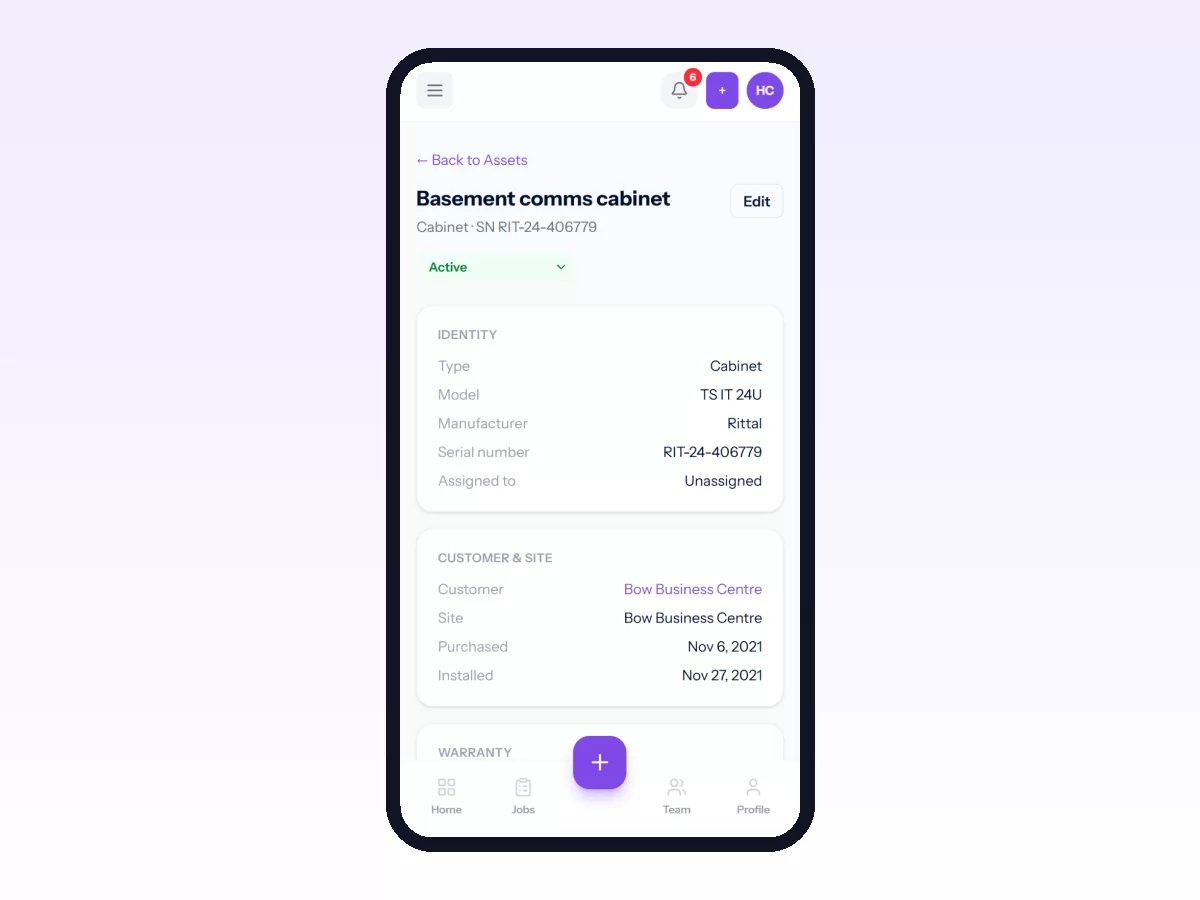
In Movtro each tower is a site with access notes. Its generators, batteries and other equipment are assets with serials, warranties and a job history. Recurring jobs create monthly, quarterly or yearly visits ahead of time and flag overdue ones. Call-outs can be marked critical, and the dispatcher gets a suggested technician based on skills, workload, availability and travel time. A job stage can require the technician to be at the site before the job moves on, and every visit records where the technician was and how far that was from the site. Checklists, photos and notes can be captured offline. Certifications have expiry reminders, and safety problems are reported on the job.
Readings such as fuel levels or battery voltages go into the checklist with an allowed range, and anything outside it is flagged. Movtro does not connect to network alarm systems.
Related reading: telecom field workforce management, generator maintenance and preventive maintenance software. Or start free.