HVAC Parts and Van Stock Management
Most second visits in HVAC happen because a part was not on the van. This covers organising stock across the warehouse and vans, recording what each job uses, and cutting the "back tomorrow with the part" visit.
In HVAC service, the most expensive part is the one that isn't on the van. The technician finds a failed capacitor in ten minutes, then drives an hour to fetch one or books a second visit for tomorrow. Managing stock well is one of the cheapest ways to raise your first-time fix rate.
Organise stock by location
Treat every place stock is kept as a location:
- the main warehouse, with bins or shelves if it is large;
- each van, as a location of its own;
- customer sites, for large contracts where you keep spares on site.
Every movement is then a transfer from one location to another, and you always know what is where.
Decide the van list
Build a standard van stock list from your job history: capacitors, contactors, fan motors, thermostats, filters, fittings, refrigerant. Start with the parts that appear on the most jobs rather than the most expensive ones, and adjust by season, with more capacitors and refrigerant before summer.
Record what is used on every job
The technician records each part used on the job, taken from the van's stock. That gives you three things:
- The van's count stays accurate, so restocking is based on facts.
- The job has a record of what was fitted, for the customer and for warranty claims.
- The unit's history shows every part replaced, so repeat failures stand out.
Restock on a rhythm
Once a week, compare each van's stock with its standard list and transfer the difference from the warehouse. Once a month, count the vans properly and correct any differences, giving a reason.
Reserve parts for planned jobs
For a big repair or installation, reserve the parts against the job when you book it so they don't get used elsewhere before the day.
Returns
Unused parts come back from jobs and go back into stock. Faulty parts returned under warranty need separate handling, so record them in the job notes.
In Movtro
In Movtro, stock is held in warehouses with named locations inside them, which lets each van be its own location. Parts and materials have a SKU, unit and cost. Stock can be received, reserved against a job, issued, used on a job, returned, transferred between locations or adjusted with a reason, and every movement stays in a permanent history. Technicians record parts used on the job from a chosen location, which updates the count, and each unit's service history shows the jobs it has had.
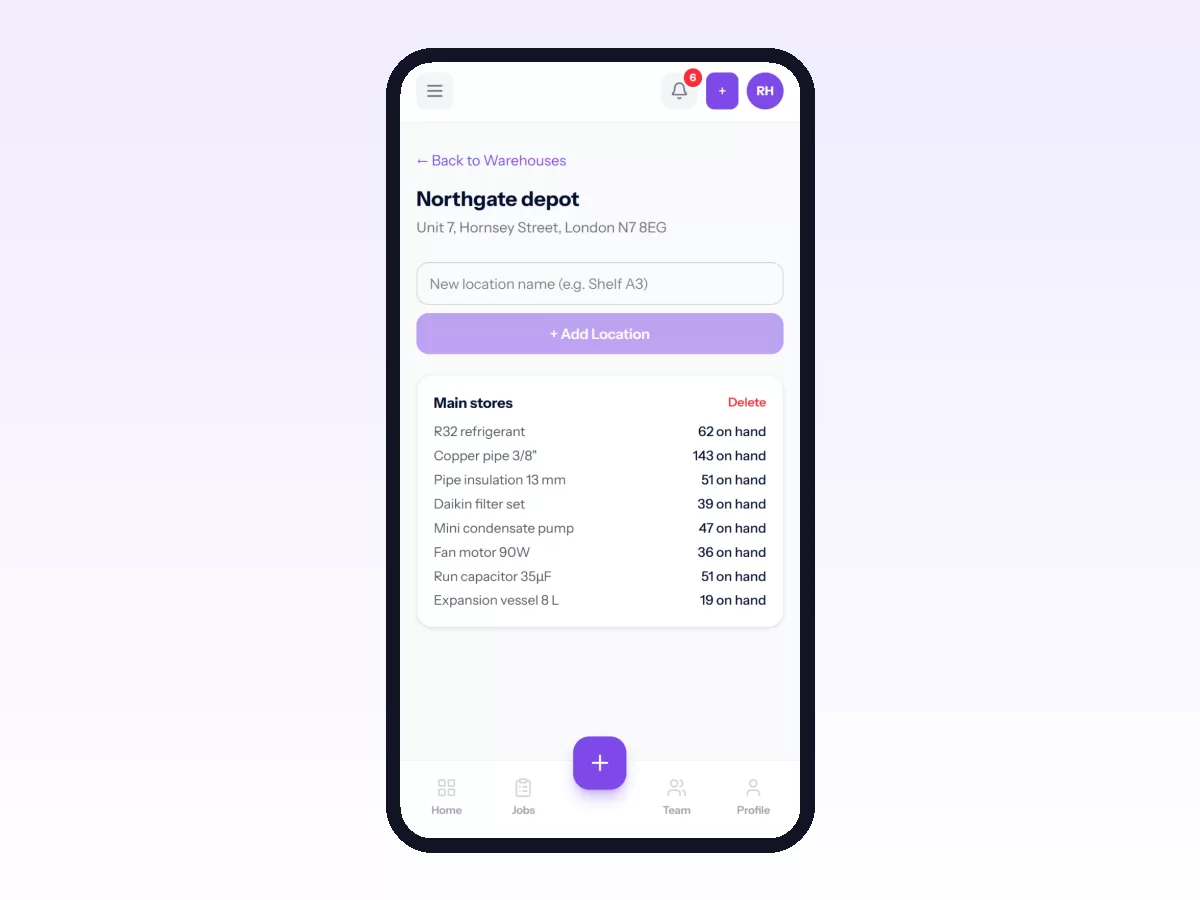
Quantities are whole numbers, so track refrigerant in whole units such as kilograms or cylinders. Movtro does not send low-stock alerts or create purchase orders.
Related reading: field service inventory management, first-time fix rate and HVAC field service management. Or start free.