Plumbing Service Management
Leaks don't wait, small jobs eat travel time, and parts decide whether a job gets finished today. How plumbing businesses keep the day under control.
Customers feel the unpredictability of plumbing work personally. Water coming through the ceiling is an emergency and a dripping tap isn't, yet both ring the same number. A well-run plumbing business sorts out urgency quickly, sends the right plumber with the right parts, and finishes the job on the first visit.
Sorting urgency
- Emergency: active leaks, burst pipes, no water, sewage backups, and gas smells if your plumbers also handle gas.
- Urgent: a blocked toilet in a home that has only one, or no hot water.
- Routine: dripping taps, running cisterns, installations and replacements.
When the call comes in, ask where the water is, whether it can be isolated and whether anything electrical is affected. Tell the customer how to turn off the stopcock while they wait.
The job on site
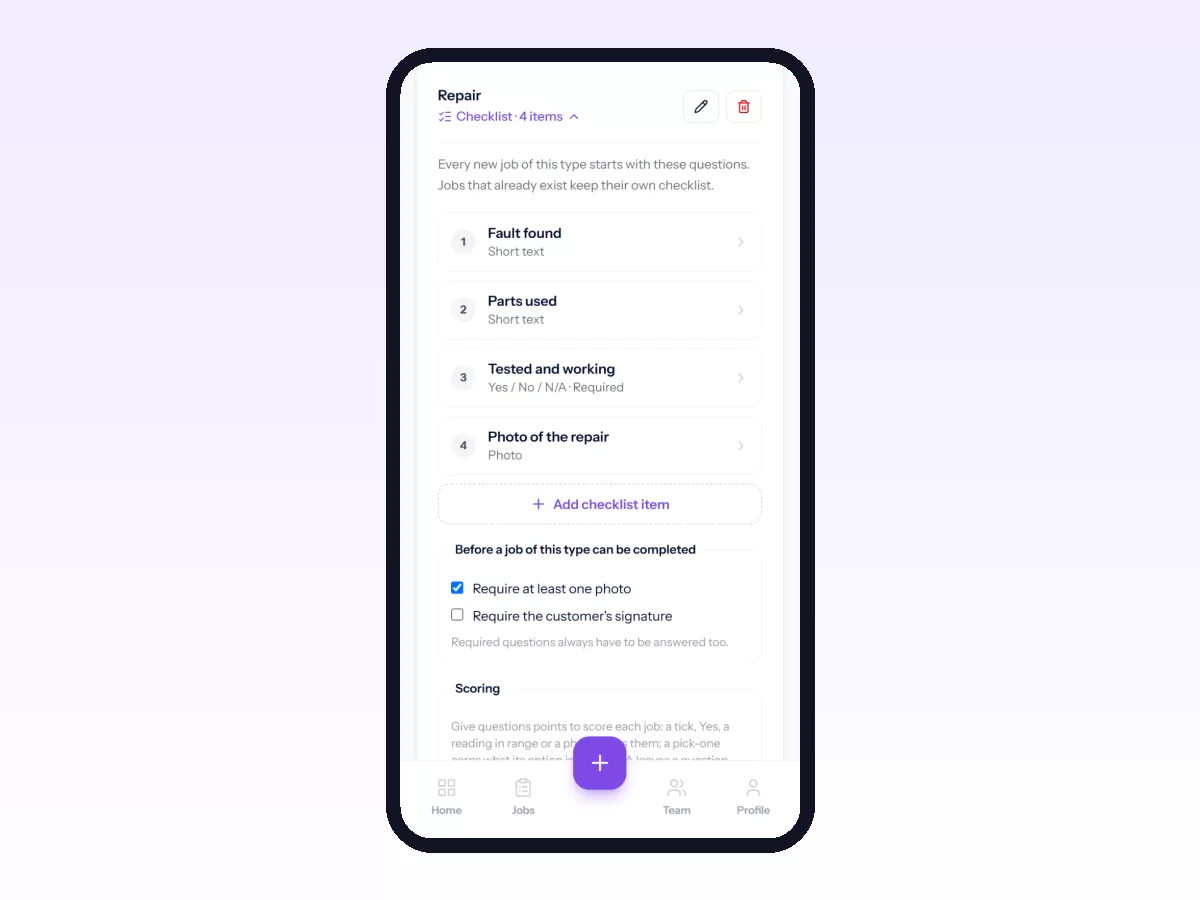
- Isolate the water and protect the area
- Diagnose the problem and photograph it
- Agree the fix with the customer before starting any larger work
- Repair or replace
- Test for leaks and pressure, and run the system
- Clean up and photograph the finished work
- Get the customer's signature
Parts decide first-time fix
Most plumbing return visits are about a part: the right cartridge, a fitting in the right size, a particular valve. Stock vans from what actually gets used, record what each job uses, and photograph the failed part so the right replacement gets ordered. See parts and inventory for field service teams.
Evidence protects everyone
Water damage leads to insurance claims and disputes. Before and after photos, a clear description of the cause and the customer's signature on completion protect the plumber and help the customer with their claim.
Recurring work
Commercial customers often want planned work such as water tank cleaning, backflow valve tests, drain jetting and boiler servicing. Set it up once so it happens on schedule. See preventive maintenance software.
What to measure
- First-time fix rate, and return visits caused by parts.
- Emergency response time.
- Jobs per plumber per day, compared with travel time.
In Movtro
In Movtro every call becomes a job with a priority, customer and site. Customers can raise requests through the portal and follow what happens to them. Dispatch assigns work from one board, with a suggested plumber based on skills, workload, availability and travel time, and the plumber gets a notification on their phone. On site they go through the checklist, add photos and notes, log fittings and parts from van stock and capture the customer's signature, with or without signal. Planned work runs as recurring jobs, and each site holds access notes that show on every job there.
See work order management, or start free.