Solar Installation and Maintenance Management
Run solar projects from the site survey through commissioning and after-sales service, with checklists, photos, equipment records and crews checked in on site.
A solar installation is a chain of jobs, often spread over weeks. Several people are involved, the customer wants to know when the system will be running, and in many places a utility has to approve the connection. Then come years of service: cleaning, inspections, inverter faults, battery replacements and warranty claims.
Solar businesses grow fast and the admin grows faster. This guide goes through the installation workflow and what to put in place so the fiftieth installation runs as cleanly as the fifth.
The installation workflow
1. Site survey
Most problems later on go back to a rushed survey. Capture:
- roof type, condition, orientation and pitch;
- shading at different times of day;
- the available area, and where the inverter and batteries will go;
- the existing electrical supply, meter and distribution board;
- the customer's load and what they want the system to do;
- photos of all of it.
With a survey checklist, nobody forgets the distribution board photo the designer needs.
2. Design and approval
This covers system size, panel layout, the choice of inverter and battery, and the quote. The customer approves before anything is ordered.
3. Installation
The crew installs the mounting structures, panels, DC cabling, inverter, any batteries, AC connections and earthing. Use a checklist and photos for each step. The customer and the inspector will ask, and a fault found later is far cheaper to diagnose when there is a photo of how it was wired.
Record the serial numbers of the panels, inverter and batteries as you install them, because warranty claims depend on them.
4. Inspection and commissioning
Before handover come the insulation and earthing tests, string voltages and currents, inverter configuration, and a test of the whole system under load. A commissioning checklist signed off by the person responsible is your record that the system was working when you handed it over.
5. Utility approval and net metering
Where net metering applies, there is paperwork with the utility and often an inspection. Track it as a separate stage. Customers ask about it more than anything else.
6. Handover
The customer signs off, gets their documents, and knows who to call.
After-sales service
Solar systems need less maintenance than most equipment, but they still need some:
- panel cleaning, more often in dusty areas;
- periodic inspections of mounting, cabling and connections;
- inverter faults, the most common service call;
- battery health checks and replacements;
- warranty claims, which need serial numbers and installation records.
Each installed system should carry its full history: what was installed, when, by whom, and every visit since.
Managing crews
Installing is team work, but accountability works best with one named lead per job. The lead checks the crew in on site, makes sure the checklist and photos are complete, and signs the job off.
Numbers worth watching
- Time from survey to installation, and where projects wait longest.
- How many installations pass commissioning first time.
- Service calls per system in the first year, which tells you about installation quality.
- Cleaning and inspection visits completed on schedule.
In Movtro
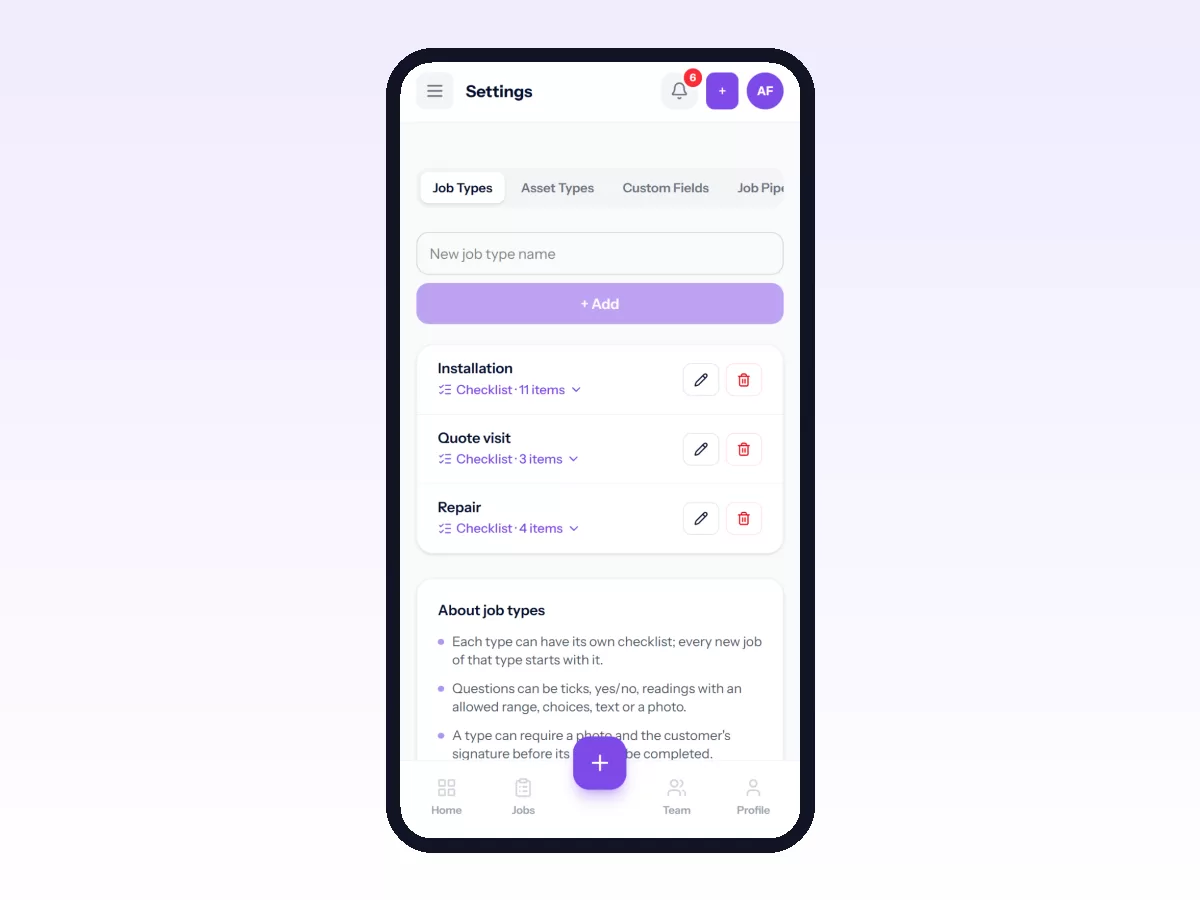
In Movtro each stage of an installation can be a job stage or a separate job, with checklists, photos, notes and the customer's signature captured on the crew lead's phone, even without signal. Starting a job records where the crew lead was and how far that was from the site. Panels, inverters and batteries can be recorded as assets at the customer's site, with serial numbers, warranty dates and a service history that every later visit adds to. Parts and materials used are taken out of stock.
Cleaning and O&M visits run as recurring jobs. You set the schedule once and each visit is created ahead of time. Customers can follow their jobs and raise service requests through the portal.
There are two limits. Each job has one assignee, so you assign a crew through its lead. And Movtro does not monitor generation or connect to inverter data.
See work order management, or start free.
Related: Solar Installation Checklist: Survey to Commissioning · Solar O&M: Managing Service After Commissioning · Solar Equipment Records: Panels, Inverters and Batteries