Solar O&M: Managing Service After Commissioning
Solar systems need less maintenance than most equipment, but they still need some. This is how installers run cleaning, inspections, faults and warranty claims as their installed base grows.
After commissioning, the installer's relationship with the customer moves from project to service. Each new system joins an installed base that needs cleaning, inspections, fault fixes and warranty claims for twenty years or more. Run properly, O&M brings recurring revenue and a steady flow of referrals. Neglect it and you end up with a queue of angry customers whose systems stopped producing without anyone noticing.
What O&M covers
- Panel cleaning, as often as dust, pollution and rainfall require.
- Periodic inspection of mounting, fixings, cables, connectors and isolators, looking for hot spots or damage.
- Inverter checks: error logs, fans and filters, firmware.
- Battery health: capacity, temperature and connections.
- Fault response: inverter errors, tripping, or a system producing far less than expected.
- Warranty claims on panels, inverters and batteries.
Scheduling
Schedule cleaning and inspections per system, and have them create themselves. In dusty regions cleaning may be monthly; elsewhere it may be quarterly or twice a year. Group visits by area so a technician can clean five systems in one neighbourhood in a morning.
The O&M visit
- Photograph the array before cleaning
- Clean the panels with the right water and equipment, never harsh chemicals
- Inspect panels for cracks, hot spots and delamination
- Check mounting and fixings
- Check DC connectors and cables for damage and heat marks
- Check the inverter display and error history
- Check battery status, if batteries are fitted
- Photograph the clean array and the inverter display
Faults
Most solar service calls are inverter faults, tripped protection or a drop in generation. Before arriving, the technician needs the system's history: what is installed, the serial numbers and any previous faults. A warranty claim needs the same record.
Contracts
An O&M contract sets the visit frequency, what each visit covers, fault response times and which repairs are included. Keep the list of covered systems exact.
What to measure
- Scheduled cleaning and inspection visits completed on time.
- Fault calls per system per year.
- Time to resolve faults.
- Warranty claims and how they turned out.
In Movtro
In Movtro each customer's system is a set of assets at their site (panels, inverter and batteries with serial numbers and warranty dates), and every visit adds to their history. Cleaning and inspections run as recurring jobs, either on a fixed calendar or counted from the last visit. They are created ahead of time and flagged when overdue. Technicians complete checklists, photos, notes and parts on their phone, with or without signal, and customers can raise faults and follow jobs through the portal.
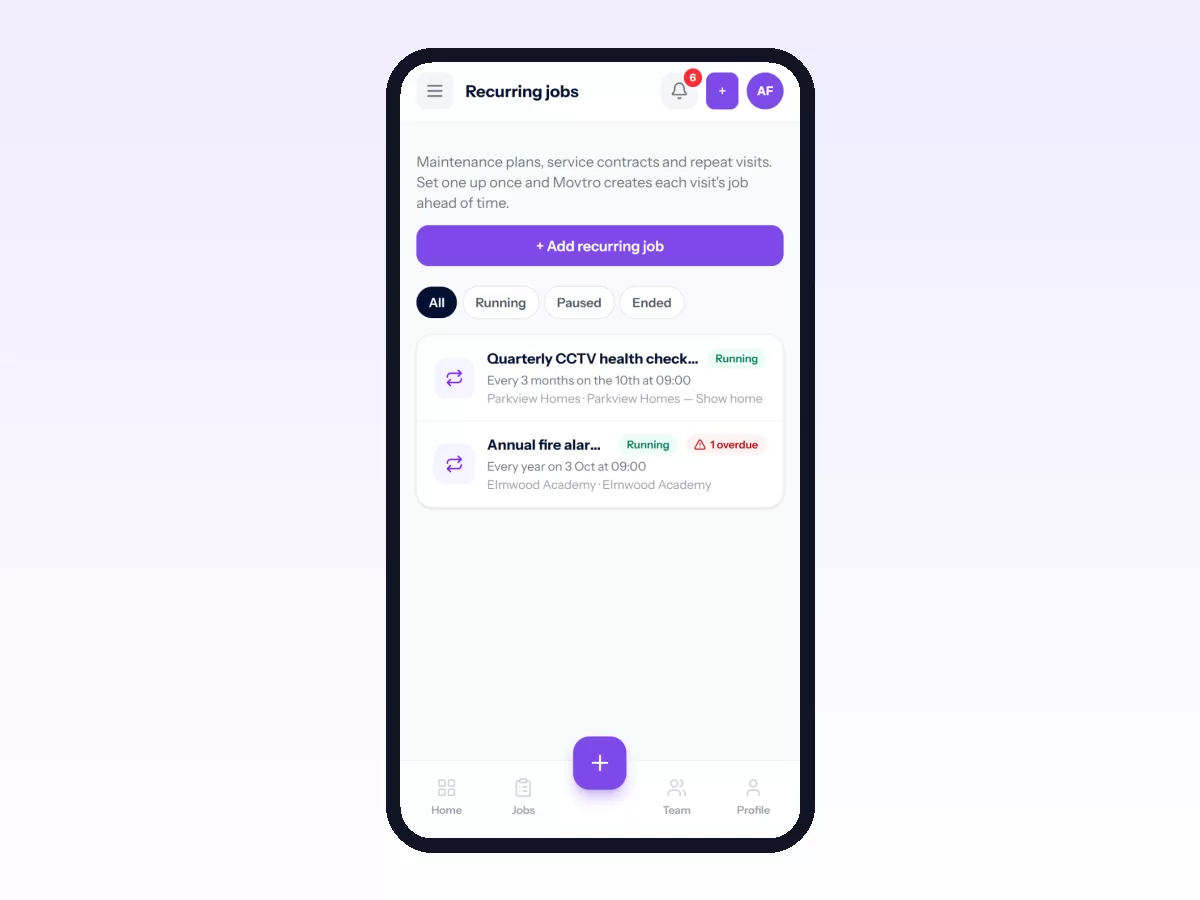
Movtro does not monitor generation or connect to inverter data, so faults are raised by the customer or by your team.
See solar installation and maintenance management and preventive maintenance software, or start free.
Related: Solar Equipment Records: Panels, Inverters and Batteries