Field Inspection Management
Surveyors, auditors and inspectors need much the same things: a plan, a standard for each inspection, evidence that holds up and a report. This is how to run inspection teams well.
Inspection work covers a wide range. Insurance surveyors assess damage, auditors check outlets against a standard, safety inspectors visit sites, loan officers verify that a business exists and quality teams check suppliers. In every case someone goes somewhere, checks things against a standard and produces evidence that other people rely on.
What makes an inspection trustworthy
- The inspector was there, shown by the location recorded at the start of the inspection and compared with the site.
- The standard was followed, with the same checklist for every inspection of the same kind.
- The evidence is real: photos taken during the inspection, not pulled from last year.
- Findings are clear about what was found, where, and how serious it is.
- Nothing changes afterwards. The record reflects what was seen on the day.
Planning inspections
Some inspections are scheduled, such as periodic audits and annual safety checks. Others are triggered by a claim, an application or a complaint. Scheduled inspections should create themselves so that none is forgotten, and triggered ones need assigning quickly to the right inspector.
The checklist
Keep inspection checklists short and specific. Each item should be something the inspector can see and confirm, such as "fire exits clear", "signage in place" or "stock stored off the floor". Group items by area and mark the ones that must never be skipped.
Evidence
Photos are most of the evidence in an inspection. Photograph the site on arrival, each finding, and anything the report will refer to. Notes should say what, where and how serious in plain words.
Findings become actions
When an inspection finds a problem it should produce a follow-up: a corrective job, a re-inspection date or a notice to the site owner. Findings that live only in a report are rarely fixed.
What to measure
- Inspections completed on schedule.
- Findings per site, and repeat findings.
- Time from finding to fix.
In Movtro
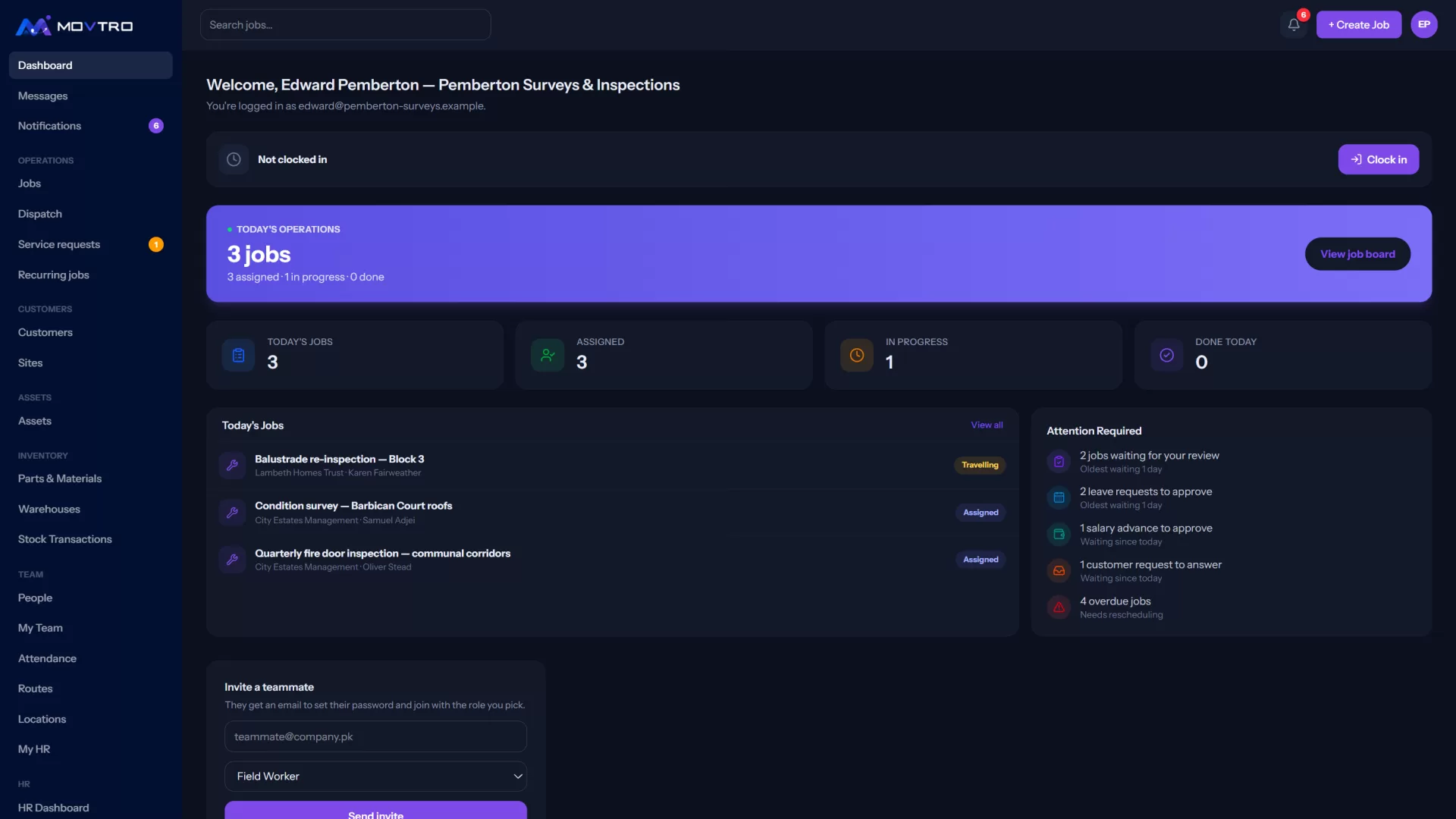

In Movtro each inspection is a job at the site. The inspector completes a checklist, photos and notes on the phone, with or without signal. Starting the inspection records where the inspector was and how far that was from the site, and a stage can require being within a set distance of it. Required checklist questions must be answered before the inspection can be completed. Scheduled inspections run as recurring jobs, and problems can be reported against a job with a category and severity. Every change is kept in the job's history.
Checklist questions take yes/no/N-A, readings with an expected range, pick-lists, short text and photos. A follow-up question can be set to appear only on a given answer, and a group of questions can repeat for each area or item inspected. Questions can carry points, a job type can set a pass mark, and the job, the portal and the service report show the score. A reading outside its range reports a problem on the job by itself. Each finished inspection has a service report PDF to download or email. The Checklist answers report (Reports → Checklist answers) exports every answer across inspections as CSV or PDF, and you can save and schedule it like any other report. Movtro does not lay reports out in your own format.
See field service checklists, or start free.
Related: Construction Site Inspection Checklist · Insurance Survey and Claim Inspection Visits · Managing Government Field Inspection Teams