Managing Government Field Inspection Teams
Food safety, building control, environmental and labour inspectors deal with large caseloads, remote premises and findings that must stand up to challenge. This covers running an inspection team with consistent records you can prove.
Government and municipal inspectors (food safety, building control, environmental health, fire safety, labour and trade standards) have the same basic problem. Each inspector covers a large number of premises, every visit has to follow the same standard, and the business, a court or an auditor may challenge the findings.
Plan the caseload
- Routine inspections run on a cycle set by risk: high-risk premises every few months, low-risk ones every year or two.
- Reactive inspections come from complaints and incidents and are prioritised by risk.
- Follow-ups check that findings were fixed.
Put routine inspections on a schedule so they are created automatically, and keep an eye on what is overdue. An overdue high-risk inspection is the first thing an auditor will ask about.
One standard per inspection type
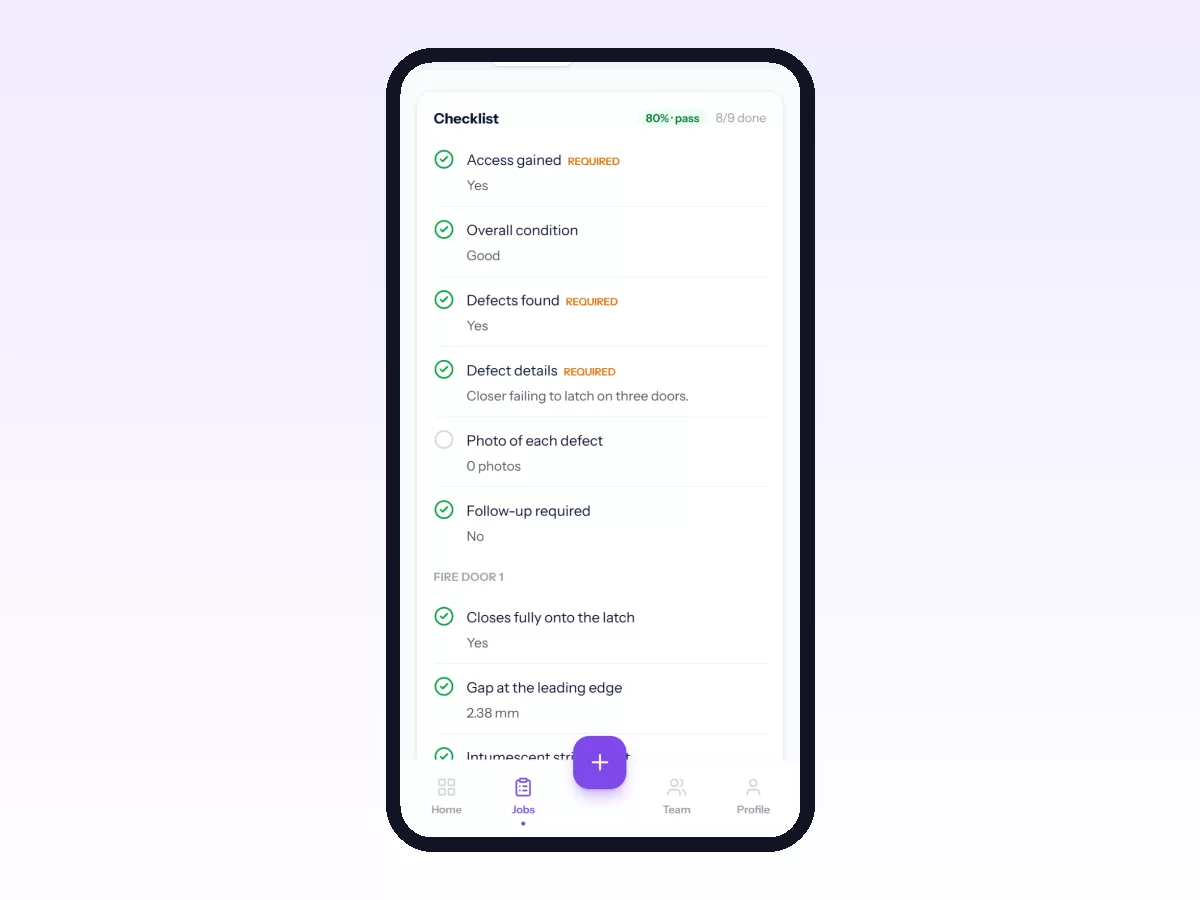
Every inspector should check the same things for the same type of premises. A checklist for each inspection type, with the critical points marked as required, keeps inspections consistent across inspectors and districts.
Findings that stand up
When something is wrong, the record needs:
- what was found and where, with a photo;
- how serious it is;
- what the business must do, and by when;
- the inspector's name, and the date and time.
Keep findings open until they are resolved, and have the follow-up visit check them first.
Proof of attendance
Inspections are sometimes disputed, by businesses ("nobody came") and internally. Record where the inspector was when the inspection started compared with the premises, record the time, and get acknowledgement from the person in charge on site.
Offline work
Inspectors work in basements, rural areas and industrial sites with no signal. The inspection app has to work offline and sync later without losing the recorded times.
Accountability inside the team
- Attendance with location for inspectors who start from the field.
- Workload per inspector, and inspections completed against the plan.
- Supervisors reviewing a sample of inspections.
- An audit trail of changes.
Data and procurement
Public bodies usually have rules on where data is stored, on security standards and on procurement. Raise these early with any software supplier.
In Movtro
In Movtro each premises is a site and each inspection is a job with a checklist; required items must be done before the job can be completed. Recurring jobs create routine inspections on a cycle and flag overdue ones. Findings are reported on the job with a category and severity, and they stay open until resolved. Starting an inspection records where the inspector was and how far that was from the premises. Photos, notes and a signature are captured, offline too. Attendance, workload per inspector, supervisor review of completed jobs, roles and permissions, and an audit log are all included.
Movtro is a cloud service. It does not issue legal notices or penalties, and it makes no claims about specific government security certifications, so check your own requirements.
Related reading: field inspection management, construction site inspection checklist and offline mode. Or start free.