Field Technician Management: Skills, Certifications and Availability
Managing field technicians well means knowing what each person can do, keeping their certifications current and giving them a working day that makes sense. A practical guide.
As far as customers are concerned, field technicians are the business. Managing them well is mostly about giving each person the right work, the right information and a fair day, and noticing early when something is going wrong. Supervision is a smaller part of it.
Know what each technician can do
Keep a skills record for every technician, listing the trades and equipment they handle with a level for each. Update it after training and after jobs that went well or badly. Without it, dispatchers work from memory and the same three people get every hard job.
Certifications need their own record: what it is, who issued it, when it was issued and when it expires. Set reminders well before expiry. If someone uncertified is sent to a job that requires it, the business carries that risk, not the technician.
Know when they can work
Record each technician's working hours and days. Approve leave in the same system the dispatchers use, so nobody is given a job on their day off. Keep an eye on overtime, because a technician who is consistently over hours is either overloaded or struggling.
Give them a day that makes sense
- Jobs on the phone before the day starts, in a sensible order.
- The customer's details, the site address and any access notes (gate codes, parking, who to ask for) on the job rather than in a chat thread.
- Equipment history for the asset they are working on, so they do not start from scratch.
- A checklist for the work, so nothing is missed and the next person knows what was done.
- A way to report a problem straight away, whether it is no access, a part that is unavailable or a safety issue.
Check quality without micromanaging
- Review a sample of jobs (photos, checklist, notes) rather than all of them, and require a review step where quality matters most.
- Track rework. A job that has to be redone is the clearest sign of a quality problem.
- Look at where work started. If someone's visits regularly begin far from the site, talk to them about it.
- Share good work. Photos of a tidy installation teach more than a policy.
Develop them
Use the records to plan training, since repeated problems on one equipment type point to a skill gap. Pair juniors with experienced technicians on complex jobs. Recognise first-time fixes and clean records as well as speed.
In Movtro
Movtro keeps skills with a proficiency level, and certifications with the issuing body, dates and a reminder before expiry. Each technician has weekly working hours, and leave is requested and approved in the same system. Dispatchers get a suggested technician based on skills, workload, availability and travel time.
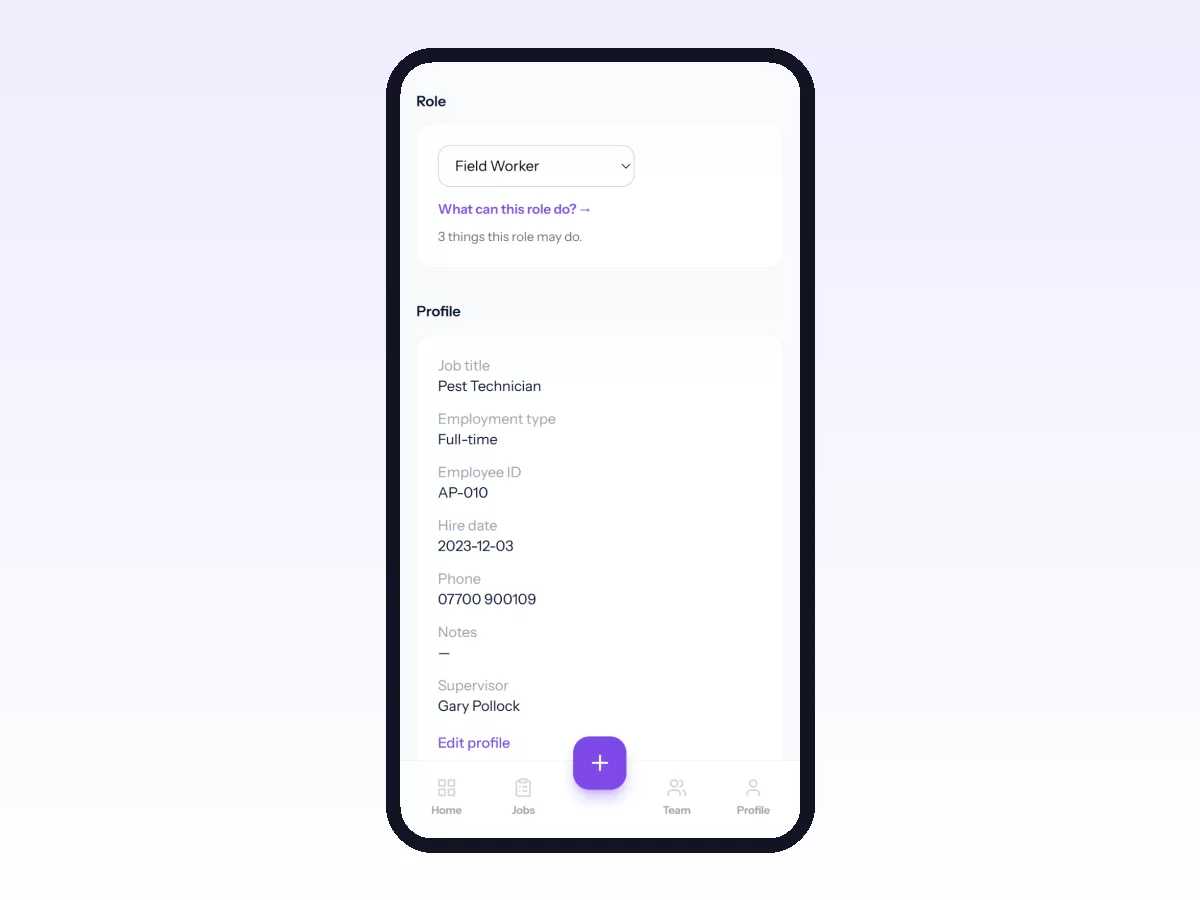
On the phone, technicians see their jobs with the site's access notes, the asset's history, a checklist (with required items that must be ticked before completing), and a place for photos, notes, parts and the customer's signature. Problems are reported on the job with a category and severity, and the job workflow can require a supervisor review after completion. The workforce report shows jobs completed, on-time rate, hours, overtime and lateness per person.
Related reading: maintenance technician management, field workforce scheduling and first-time fix rate. Or start free.
Related: HVAC Technician Certifications and Skills: Keeping Track