Maintenance Technician Productivity: Where the Day Goes
Maintenance technicians often spend less than half the day on the work itself. This covers where the rest goes, how to measure it without stopwatches, and the changes that win time back.
Follow a maintenance technician for a day and the maintenance itself, the "wrench time", is often well under half of it. The rest goes on travel, waiting, hunting for information and fetching parts. Asking technicians to work faster rarely helps. Removing what stops them working does.
Where the day goes
- Travel between sites, often back and forth across the same area.
- Waiting for access: keys, security, the site contact.
- Looking for information, such as what was done last time, which model this is and where the manual is.
- Parts: going to the store, finding the part is out of stock, coming back tomorrow.
- Paperwork, with job sheets often filled in twice.
- Rework, coming back because something was missed.
Measure it without stopwatches
You do not need time-and-motion studies, because the job records tell you most of it:
- Time in each stage, meaning how long jobs sit scheduled, travelling or in progress. Long travel or waiting shows up here.
- Problems reported by category. Counts of "no access" and "part unavailable" point straight at causes.
- Rework, meaning jobs that had to be redone.
- Jobs completed and on-time rate per technician, compared across people doing similar work.
- Overdue planned work, which tells you reactive jobs are crowding out maintenance.
Changes that give time back
Group the work
Plan visits by area and put them in a sensible order. Do the planned maintenance for one site on the same visit.
Sort out access before arrival
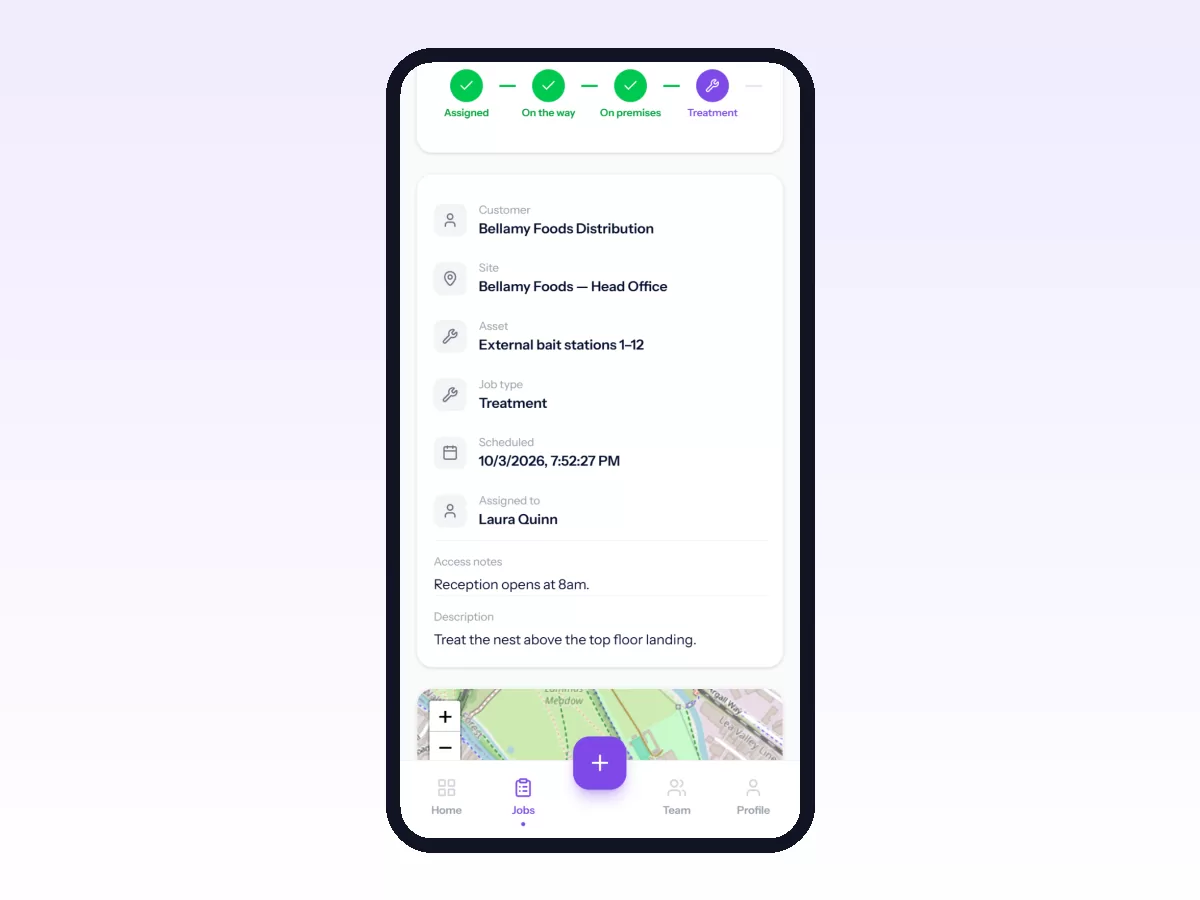
Keep access notes on each site: who holds the keys, security desk hours, parking. Confirm access for the first job of the day the afternoon before.
Give technicians the history
Technicians should see the equipment's past jobs, notes and documents before they arrive, not after ringing the office.
Get parts right first time
Keep common parts on the van, record what is used on every job, and check the history for recurring faults before you send someone.
Stop doing paperwork twice
Record the job once, on the phone, at the time. Checklists, photos, notes and sign-off replace the paper sheet.
Prevent rework
Make the commonly missed checklist steps required, and review a sample of completed jobs.
Talk to the technicians
The people doing the work know where the time goes. Ask them each month what slowed them down, and fix one thing each time.
In Movtro
Movtro's jobs report shows time in each stage, rework, overdue jobs and problems by category (no access and part unavailable among them). The workforce report shows jobs completed, on-time rate and hours for each technician. Sites carry access notes, and assets keep their job history and documents. Stock is held by location, with the parts used on each job recorded. Checklists can block completion until required items are done, the day's jobs can be put in route order, and recurring jobs can combine several units on one visit.
Related reading: maintenance technician management, first-time fix rate and field workforce productivity metrics. Or start free.