Preventive vs Reactive Maintenance for Field Teams
Every maintenance team does both, so what matters is the balance. What each one costs, when running to failure is the right call, and how to shift the balance without doubling the workload.
Reactive maintenance fixes equipment after it breaks. Preventive maintenance services it on a schedule so it breaks less often. Every field maintenance team does both, and the balance decides whether the team is calm or firefighting.
What reactive maintenance really costs
A breakdown costs more than the repair:
- Emergency call-outs at the worst possible time, often out of hours.
- A journey for one job, where a planned round would have covered several.
- Parts bought in a hurry, if you can find them at all.
- The customer's downtime: a cold store warming up, a production line stopped, a building with no water.
- Damage to the relationship, because customers remember the breakdowns and forget the services.
What preventive maintenance really costs
- Visits that find nothing wrong. That is the point, but each still takes a technician's time.
- Planning, since someone has to set up the schedule and keep it going.
- Discipline. A visit that slips once tends to keep slipping.
When running to failure is right
Preventive maintenance isn't always worth doing. Let equipment run to failure when:
- it is cheap and quick to replace, like light fittings or small fans
- its failure has no effect on safety or the business
- it fails at random, so servicing wouldn't prevent it anyway.
Everything else deserves a schedule, especially equipment whose failure is dangerous, expensive or noticed by the customer.
Shifting the balance
- List your equipment by impact and start preventive work on the ten or twenty units whose failure does the most harm.
- Use the history. Units that keep breaking down are the first candidates.
- Set simple schedules: quarterly for most mechanical equipment, monthly for critical units and yearly for low-risk ones. Adjust them based on what the visits find.
- Standardise the visit with a checklist so every service covers the same points and records what was found.
- Watch overdue visits. When visits slip, a programme fails without anyone noticing.
- Measure breakdowns per unit before and after. That number is what justifies the programme.
Where the workload goes
Teams worry preventive work will double their load. In practice planned visits replace emergency ones: fewer call-outs, grouped travel, parts ordered ahead. The work moves out of nights and weekends and into the working week.
In Movtro
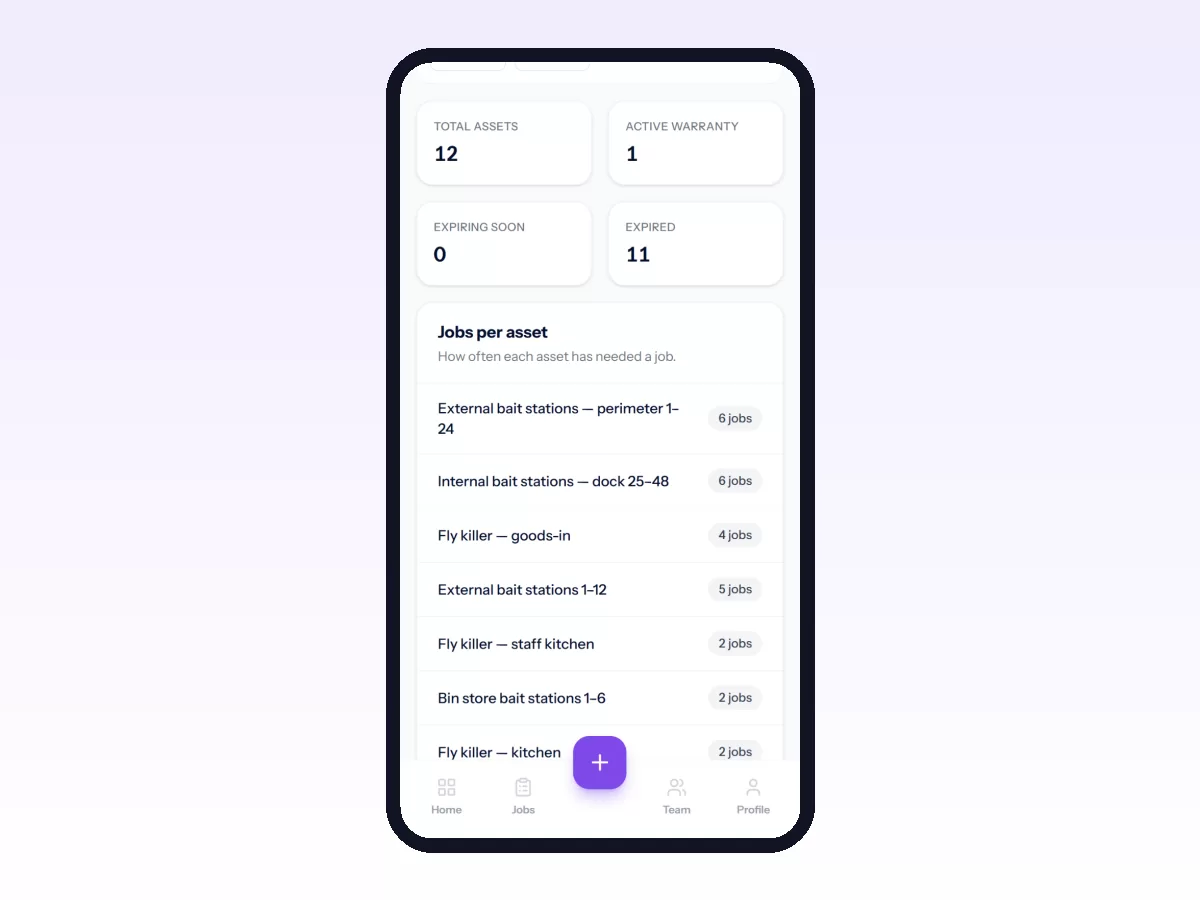
Movtro handles both kinds of work in one system. Reactive work comes in as service requests from customers or as jobs the office creates. Preventive work is set up as recurring jobs, every N days, weeks, months or years, either on a fixed calendar or counted from when the last visit was completed. Visits are created ahead of time and overdue ones are flagged. Each unit is an asset with a history of every job on it, planned or reactive, which makes repeat breakdowns easy to spot. Checklists keep every visit to the same standard.
Movtro does not schedule maintenance by running hours or meter readings.
Related reading: preventive maintenance software, maintenance work order software and equipment service history. Or start free.