Field Service Software for Electrical Contractors
Electrical contractors handle emergency callouts, small jobs, installation projects and test certificates side by side. How to organise the work so nothing gets missed and every job is safe and recorded.
In one week an electrical contractor might take an emergency call about a tripping supply, do three small jobs replacing sockets and fittings, spend a day on a new installation, carry out a periodic inspection and price up a rewire. Each needs different planning. All of it needs a clean record, because electrical work that goes wrong can be dangerous and expensive.
The kinds of work
- Emergency callouts: power loss, tripping breakers, burning smells. These need a fast response and a safe, methodical diagnosis.
- Small works: sockets, lighting, fans, fixtures. Lots of short jobs, where travel time between them decides how the day goes.
- Installations: new wiring, distribution boards, solar, EV chargers, generators and changeover switches. These run over several days, in stages.
- Inspection and testing: periodic checks of existing installations, with results the customer keeps.
Build safety into the process
In electrical work, the checklist items that matter most are the ones that keep people alive:
- Isolate the supply and lock it off
- Prove the circuit is dead with a tested voltage indicator
- Photograph the board before work
- Complete the work to the relevant standard
- Test continuity, insulation resistance, polarity, earth fault loop and RCD operation, as the work requires
- Photograph the finished work and the board
- Label circuits and record the changes
Make the isolation and testing steps required so nobody can close a job without them.
Evidence
A lot of electrical work ends up hidden behind walls and inside boards. Photos taken before closing up, test results and a clear description of the work protect the contractor if something goes wrong later, and they give the next electrician what they need to work safely.
Parts and materials
Cable, breakers, sockets, fittings and consumables vanish fastest when nobody records them. Record materials against each job, for billing and to keep van stock accurate. See parts and inventory.
Scheduling small jobs
Small jobs only pay if you keep travel under control. Group them by area, plan the day's route, and leave room for the emergency that is bound to come in. See technician scheduling.
In Movtro
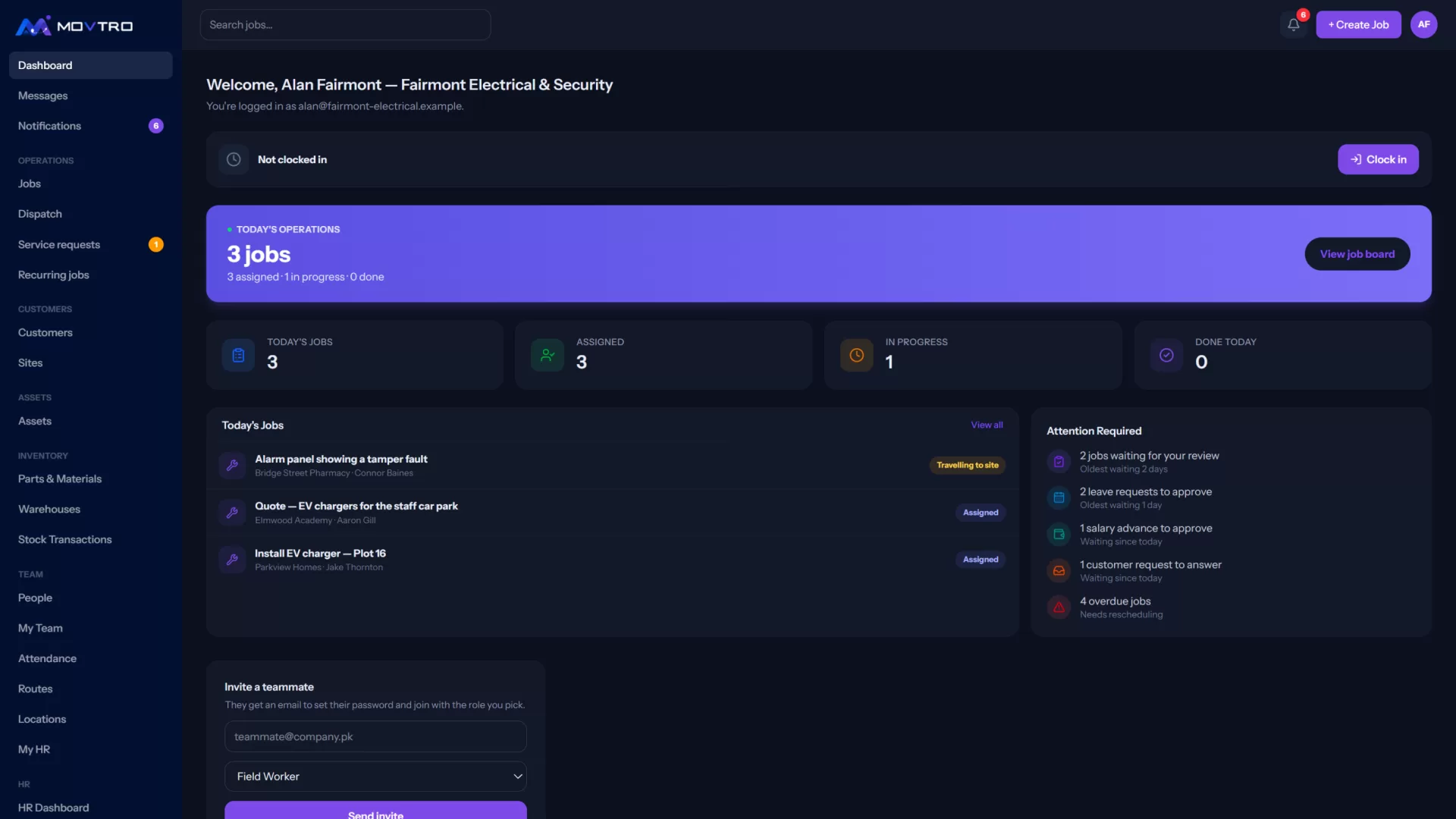

In Movtro, callouts, small works and installation stages are all jobs, linked to customers, sites and assets such as distribution boards, generators and chargers. Required checklist items, such as isolation and testing, stop a job from being completed until they are answered. Test results like insulation resistance or loop impedance are checklist questions of their own, each with a unit and an expected range. A result outside the range is flagged and reports a problem on the job automatically. Electricians write up the work in notes, add before-and-after photos, log cable and parts used from stock, and capture the customer's signature on their phone, with or without signal. Dispatch assigns work from one board, routes can be planned stop by stop, and customers can follow their jobs and raise requests in the portal. Periodic inspections can run as recurring jobs.
Movtro does not produce electrical test certificates or quotes. You can attach certificates to the job or asset as documents.
See work order management, or start free.
Related: EV Charger Installation and Maintenance · Running a Smart Home Installation Business