Field Operations Management: A Complete Guide
Field operations management covers everything from a customer needing something to the work being done, recorded and paid for. Here are the parts, how they fit together, and where most operations leak.
Field operations management means running work that happens outside the office. It starts when a customer needs something and runs through planning, travel, the work itself and the record of it, to billing and paying the people who did it. It is broader than any one tool, and most of it is about the handoffs between steps.
The flow
Whatever the industry, every field operation follows the same broad flow:
- Demand: requests, contracts and planned work.
- Planning: what happens when, and who does it.
- Execution: travel, the work on site, evidence.
- Closure: sign-off, review, invoicing.
- People: attendance, leave, expenses, pay.
- Learning: the numbers that tell you what to change.
A weak step shows up as cost somewhere else.
Demand
Work arrives as customer requests, contract visits that fall due and follow-ups from earlier jobs. What matters here is capture: every request in one place, with a quick decision on each. See service request management and preventive maintenance software.
Planning
Planning matches work to people by skills, availability, location, parts and promises made to customers. If you plan ahead, dispatching during the day stays manageable. See technician scheduling and technician dispatch.
Execution
The field team travels, does the work and records it with checklists, photos, parts and the customer's signature. How well this step goes decides first-time fix, customer satisfaction and whether the job can be billed. See work order management and field service checklists.
Closure
A job is closed when it is signed off, reviewed where needed, and ready to invoice. Jobs that sit at "completed" and are never closed are revenue you have not collected yet.
People
Field staff clock in from wherever they start, take leave, spend money on the road and need paying correctly. If this runs separately from the work, someone re-types it every month. See field employee attendance tracking and payroll for field staff.
Learning
Keep a short list of numbers and review them weekly: first-time fix rate, on-time performance, backlog and utilisation. See field service KPIs.
Where operations leak
- Requests get lost between channels.
- Jobs go to the wrong person, or without the right part.
- Badly ordered visits mean travel eats the day.
- Work is done but not recorded, so it cannot be billed or proven.
- Preventive work is forgotten and turns into breakdowns.
- Payroll is re-typed, with errors each month.
Fixing the biggest leak usually pays for fixing the next.
Getting started
Start with the step that hurts most. That is usually getting jobs into one place and assigning them through the app. Then work outwards. How to replace Excel and WhatsApp for field operations has a four-week plan.
In Movtro
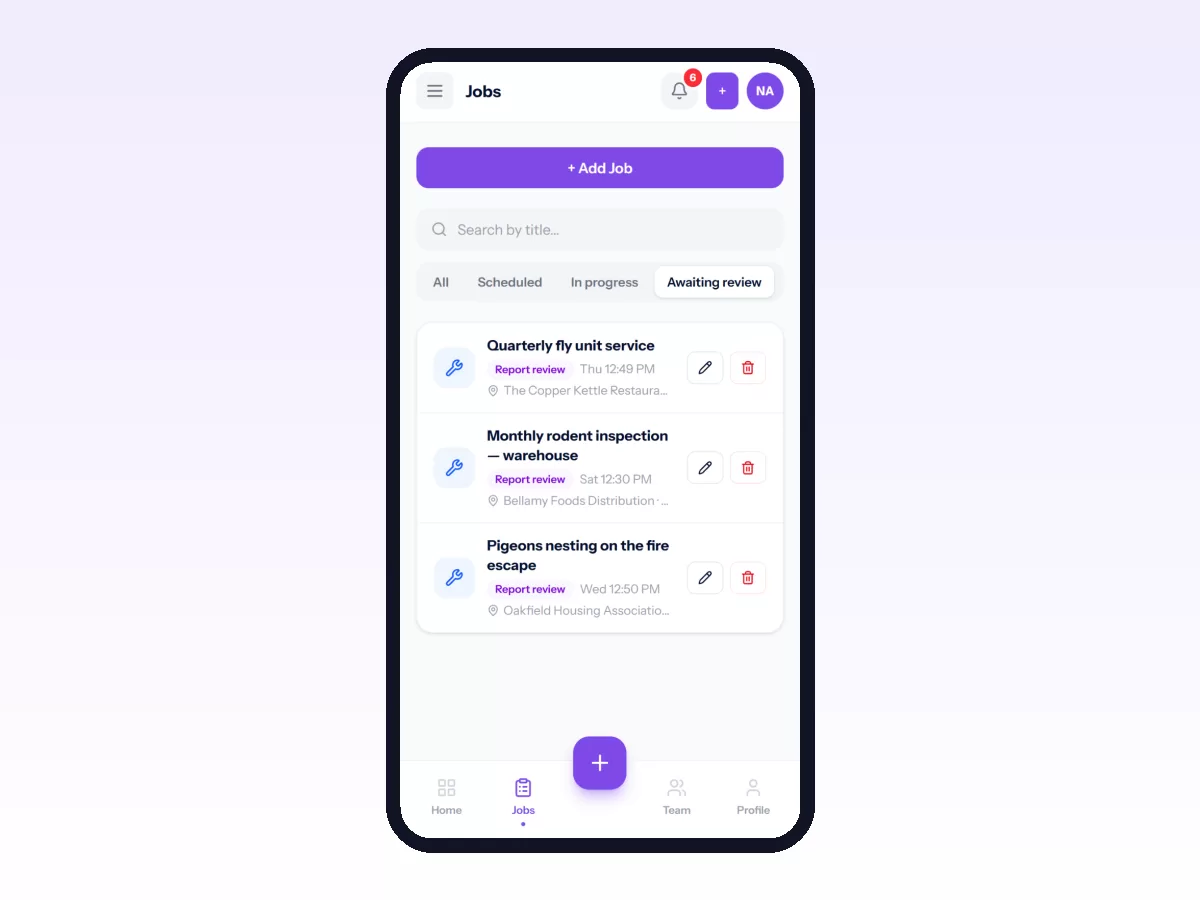
Movtro covers the whole flow in one system. It has service requests from a customer portal, recurring jobs for planned work, and scheduling and dispatch with a suggested technician. The field app handles checklists, photos, parts and signatures and works without signal. There is also attendance with location, HR, expenses and payroll, and reports and analytics on the numbers above.